
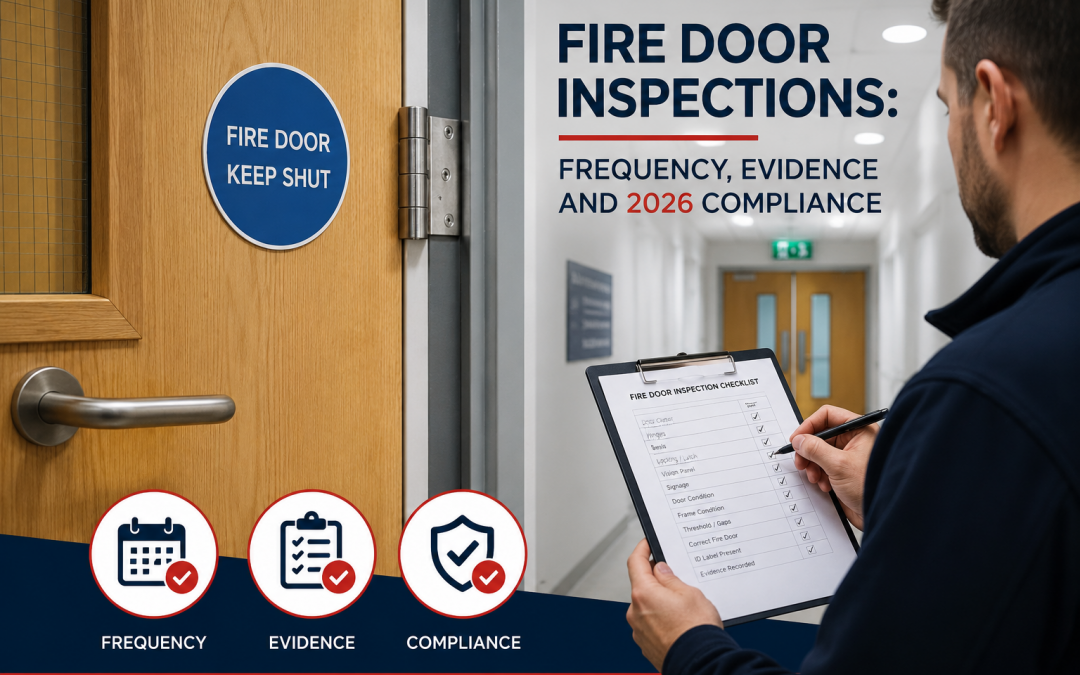
Fire door inspections in practice: frequency, evidence and fix-first priorities for 2026 compliance
If you manage a care home, HMO, student accommodation or an office, 2026 will not be a year to leave fire door compliance to chance. Fire doors are a critical part of passive fire protection, protecting escape routes and holding compartment lines so evacuation and firefighting can proceed safely.
Safeguard Consultancy helps duty holders cut through complexity with competent fire door surveys, clear evidence, and practical prioritisation. This guide distils what the law expects, what an inspection should cover, typical defects to watch for, how often to check, and which fixes to schedule first.
What the law expects in 2026
Under the Regulatory Reform (Fire Safety) Order 2005, the responsible person must ensure general fire precautions are suitable and sufficient, which includes keeping fire doors and doorsets in effective working order. For multi-occupied residential buildings, Section 156 of the Building Safety Act strengthens duties for cooperation, information sharing, and record keeping. Where the Building Safety Act’s Golden Thread principles apply, evidence must be structured, accurate, and accessible across a building’s life.
Approved Document B sets guidance for means of escape and compartmentation. BS 9999 and BS 9991 provide risk-based frameworks that influence inspection frequency and management arrangements. For healthcare and schools, HTM 05 and BB100 remain key benchmarks.
Bottom line, there is a legal duty to maintain fire doors so they perform as intended. Regular checks, competent inspections, and documented maintenance form part of that duty.
Safeguard E-Learning offer online fire safety training courses such as Fire Safety Awareness, Fire Door Training, Fire Extinguisher Training and Fire Marshal Training
Fire Safety Training & Certification: Online Courses & Training
What a competent fire door inspection includes
A competent fire door inspection is systematic, evidence-led, and referenced to the door’s certification data where available. Safeguard Consultancy’s fire door inspections typically review:
- Certification and identification, including labels, plugs, or documentation for the doorset and components where present.
- Door leaf and frame condition, edge integrity, core exposure, damage, and any unauthorised alterations.
- Gaps and alignment, including threshold, head, and vertical stiles, measured against tolerances set out in BS 8214 and manufacturers’ data.
- Intumescent and smoke seals, presence, condition, continuity at corners, and correct specification.
- Glazing, including glass type, glazing beads, intumescent liners, and fixing details.
- Hardware and ironmongery, such as hinges, locks and latches, strikes, keepers, closers, hold-open devices, and signage, with fixing integrity and compatibility.
- Self-closers, closing force, smooth operation, and reliable positive latching onto the strike.
- Interfaces with surrounding construction, including frame packing, fire-stopping at frame-to-wall junctions, and any adjacent compartmentation issues.
Evidence should include context photographs and close-ups, measurements, location IDs tied to a plan or QR tag, and clear risk-based priorities. Where remedial work is completed, keep installer sign-offs, product data sheets, photographic close-outs, and third-party certification where applicable to support audits and the Golden Thread.
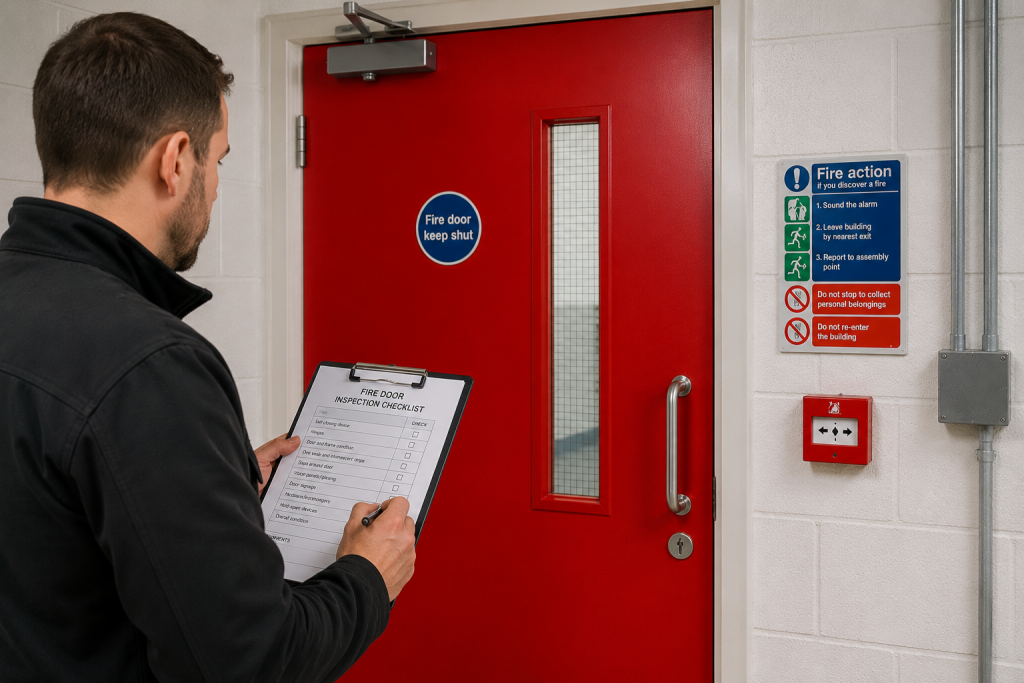
Typical defects you should expect to find
Common issues that undermine performance often appear where doors are heavily used:
- Excessive gaps at head, hinge, or latch side, or at thresholds.
- Missing, painted-over, damaged, or incorrect intumescent and smoke seals.
- Damaged leaves or frames, split edges, or exposed or saturated cores.
- Failed self-closers, disconnected arms, incorrect power settings, or binding.
- Poor latch engagement or misaligned strikes that prevent full closure.
- Damaged, missing, or incompatible glazing systems and beads.
- Unauthorised alterations, drilled holes, surface bolts, or kickplates that compromise integrity.
- Incorrect or missing fire door signage.
Where defects indicate wider compartmentation concerns, a targeted fire compartmentation survey is recommended to verify barrier continuity. Safeguard Consultancy delivers both fire door inspections and broader fire safety surveys, and can escalate to a fire compartmentation survey where needed.
Frequency by risk profile
There is no single legal interval, but frequency should be risk-based and recorded in your fire safety management system:
- Care homes and healthcare, high wear and sleeping risk: monthly local checks by trained staff, with 6-monthly competent inspections; increase cadence in high-traffic corridors and doors protecting escape stairs.
- HMOs and student accommodation: monthly local checks during terms, with 6 to 12-monthly competent inspections depending on usage and history of defects.
- Offices and commercial premises: quarterly local checks in busy cores, with 12-monthly competent inspections; increase after refurbishments or tenant changes.
Also check after any works to services near frames, following reported damage, or where alarms, hold-open devices, or access control have been altered. Record your rationale and triggers in the fire risk assessment and keep evidence aligned.
If you are planning your wider compliance cadence, a professional fire risk assessment can set the inspection regime and tie actions to a clear plan. Safeguard Consultancy provides support for workplaces and estates through its fire risk assessment service.
Fix-first priorities to protect escape and compartment lines
Prioritise by life safety impact and likelihood of failure:
- Doors that do not self-close and positively latch on their own from any open angle.
- Doors held open without an approved hold-open device linked to the alarm.
- Major gaps, missing or perished seals, or clear glazing system failures.
- Hardware failures that prevent effective closure, engagement, or smoke control.
- Frame-to-wall junctions with visible voids or missing fire-stopping.
- Unauthorised alterations that compromise certification or tested detail.
Rectify issues that cut across protected stair enclosures, cross-corridor doors, and doors defining compartment lines before lower-risk locations. Where the door or frame cannot be economically brought back to a compliant condition, replacement to a tested doorset specification is typically the safest route.
Competence, qualifications, and who can maintain a fire door
Inspections should be carried out by a competent person with the right training, experience, and knowledge of British Standards, product certification, and typical installation methods. Minor adjustments may be undertaken by competent in-house maintenance teams where they do not affect fire-resisting performance. Works that change performance, such as replacing glazing systems, intumescent seals, or hardware with different specifications, should be performed by trained and competent personnel, often third-party certified installers. Keep competence evidence, training records, and installer sign-offs as part of your documentation.
Evidence that satisfies auditors and supports the Golden Thread
A coherent audit trail typically includes:
- Issue logged with context and close-up photos, measurements, and location ID.
- Risk rating and priority tied to escape route or compartment function.
- Action owner, planned date, and interim controls where needed.
- Close-out photos, product details, and installer sign-offs on completion.
- Version-controlled records linked to your fire risk assessment, evacuation plans, and maintenance logs.
If your auditor requests a broader view, a fire safety audit or building fire safety survey can validate systems and documentation across doors, detection and alarms, emergency lighting, and signage.
Realistic timescales and cost drivers
Timescales depend on building size, access, occupancy, and the number of doorsets. Costs vary with door count, complexity, evidence requirements, out-of-hours access, and the volume of remedial work. Grouping inspections with a fire compartmentation survey or planned maintenance can reduce disruption and speed close-out. Request a tailored quote, share layout drawings and legacy reports, and confirm access constraints early.
FAQs
- Is it a legal requirement to have fire doors inspected? The law requires you to maintain fire doors so they perform as intended. Regular checks and competent inspections form part of meeting duties under the Fire Safety Order.
- What is involved in a fire door inspection? A systematic review of certification, leaves and frames, gaps, seals, glazing, hardware, self-closers, signage, and interfaces with surrounding construction, supported by photo and measurement evidence.
- How often should fire doors be checked? Use a risk-based regime. Monthly local checks in higher-risk or high-traffic settings, with 6 to 12-monthly competent inspections depending on building type and wear.
- Who can maintain a fire door? Competent staff can complete minor adjustments, but works affecting fire-resisting performance should be carried out by trained and competent personnel, often third-party certified installers.
- What is the British Standard for fire door inspection? BS 8214 guides fire door installation, use, and maintenance; BS 9999 and BS 9991 inform management and frequency through risk-based frameworks. Follow manufacturer data and certification details for each doorset.
Safeguard Consultancy supports care, residential, education, and commercial estates nationwide with fire door inspections, fire safety surveys, and practical, evidence-led reporting.
Fire Door Surveys and Inspections for UK Buildings - Safeguard Consultancy