
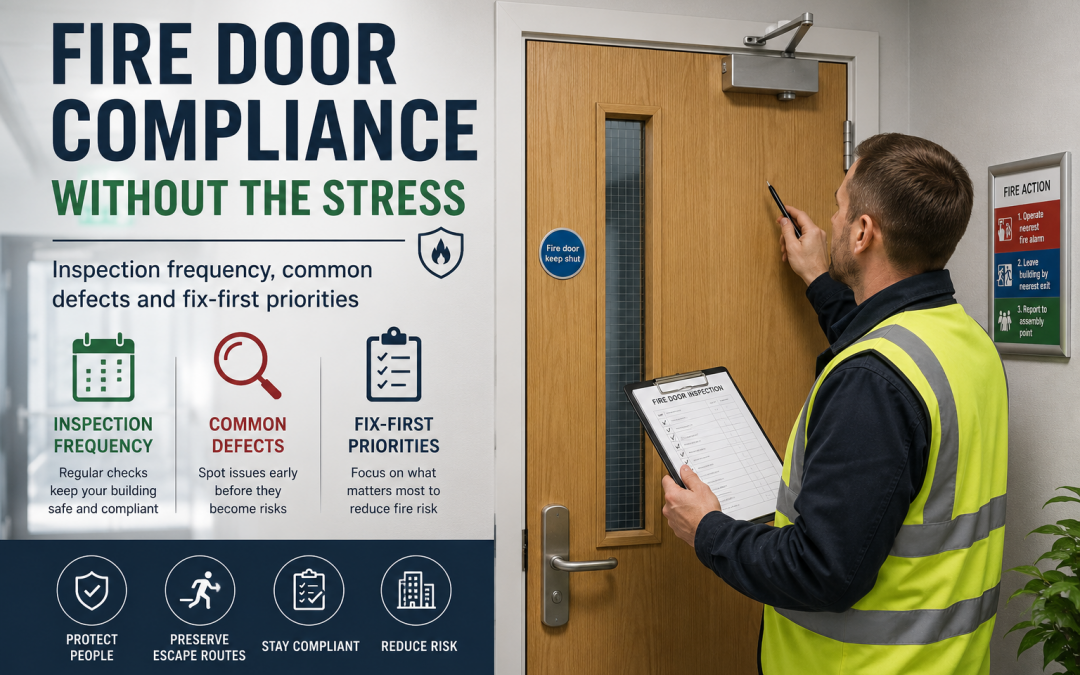
Fire door compliance without the stress: inspection frequency, common defects and fix-first priorities
Spring and summer maintenance periods are the ideal time for estates teams to review fire door compliance and tackle outstanding issues before audits arise. As one of the most important life safety measures in any building, fire doors require consistent inspection and clear record keeping. With a structured inspection routine, photo-based reporting, and a risk-led approach to remedial works, maintaining compliance becomes far more manageable and efficient.
This guide explains why doors fail, how often you should check them in different premises, what a competent inspection involves, who can repair them, and what evidence regulators expect. Where you need deeper certainty or specification help, Safeguard Consultancy provides professional fire door surveys and passive fire protection advisory to support procurement and sign-off.
Why fire doors fail routine audits
Most non-compliances are avoidable. Common failure points repeatedly seen by Safeguard Consultancy include:
- Excessive gaps: More than 4 mm at the sides or head, or more than 8 to 10 mm at the threshold where no threshold seal is specified, can compromise performance. Tapered or uneven gaps are also red flags.
- Damaged or missing seals: Intumescent and smoke seals cut, painted over, missing, incorrectly sized, or poorly seated. Brush seals that are permanently deformed or contaminated with paint and dust are routinely cited.
- Glazing issues: Uncertified or unmatched glazing systems, loose or missing glazing beads, incorrect glazing tapes or sealants, and cracked panes. The whole glazed assembly must be compatible with the tested door design.
- Closers: Missing, disconnected, wrong power size, or misadjusted closers that let doors slam or fail to latch. Delayed action or backcheck settings are often wrong for corridor pressures or user needs.
- Ironmongery: Non-compatible hinges, inadequate fixings, missing intumescent pads behind hardware where required, warped or twisted latches, and hold-open devices used without an automatic release system.
- Door leaf and frame condition: Swelling, splits, delamination, rebated damage, or frame repairs with non-appropriate fillers. Unlabelled or untraceable replacement parts are common causes of audit queries.
These issues often arise after minor works, redecoration, or day-to-day wear. A little vigilance catches them early.
How often inspections should take place
Inspection frequency should follow a risk-based approach, aligned with the Regulatory Reform (Fire Safety) Order 2005 and British Standard guidance such as BS 9999 and BS 8214. Typical patterns:
- Residential blocks and HMOs with frequent use: Monthly to quarterly local checks on communal doors and flat entrance doors within scope, with a formal recorded inspection every 6 months.
- Care homes and healthcare: Monthly local checks, formal inspections at least every 3 to 6 months due to vulnerability of residents and door usage. Where HTM-05 applies, ensure local policy aligns with clinical risk and staffing.
- Education and offices: Quarterly local checks, formal inspections every 6 months, with extra checks after refurbishment or holiday works.
- High-traffic or high-risk areas: Increase frequency. Doors on pressurised escape routes, kitchens, plant areas, or busy circulation spaces degrade faster.
Always review frequency in your fire risk assessment and document the rationale in your fire safety management system. If you are refreshing broader arrangements, Safeguard Consultancy can assist with an office fire risk assessment and wider fire risk assessment planning to set defensible inspection cycles.
What a competent fire door inspection involves
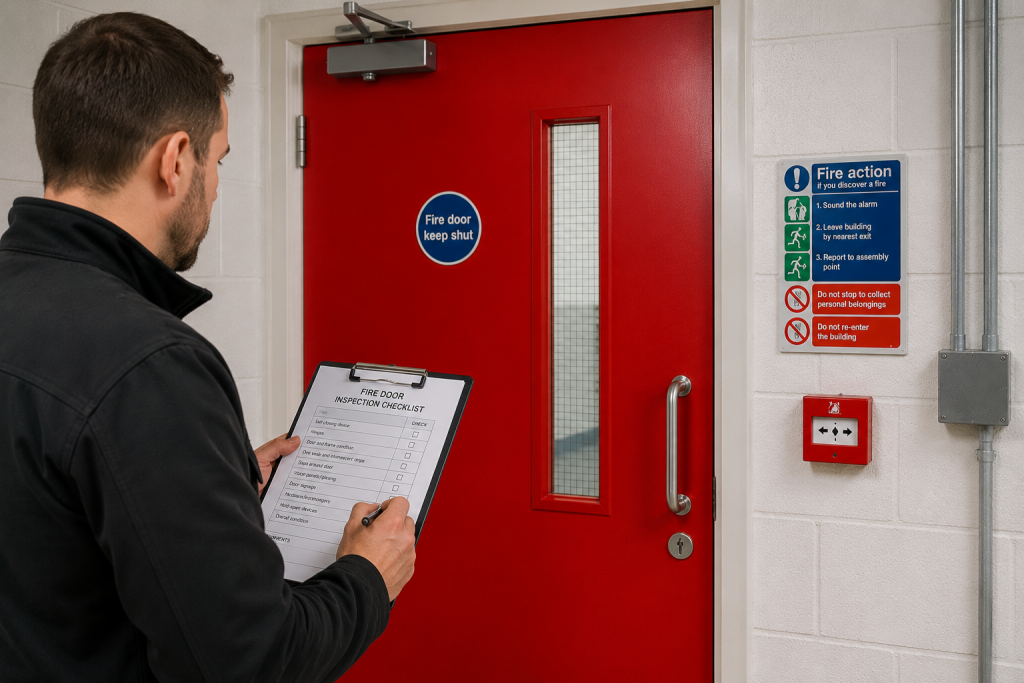
A competent inspection is systematic, evidence-led, and referenced to the door’s certification data where available. It typically includes:
- Identification: Door location, function, rating, manufacturer or certification label, and compatibility of leaf, frame, glazing, and hardware as a complete doorset.
- Gaps and alignment: Measured gaps at head, jambs, and threshold; hinge wear; leaf twist or bow; free swing and closing speed; latch engagement.
- Seals and stops: Presence, size, and condition of intumescent and smoke seals; integrity of frame stops; continuity around the perimeter.
- Glazing: Beads tight and undamaged; correct intumescent glazing systems; visible markings if applicable; no cracks.
- Closers: Correct EN power size for door size and usage; controlled closing from any angle; positive latching; compatibility with hold-open or swing-free devices where installed.
- Ironmongery: Three or more CE/UKCA marked hinges with correct screws; intumescent pads behind hardware where required; suitable locks and keeps; compliant signage.
- Condition and context: Leaf, frame, and surrounding wall condition; evidence of previous alterations; any air pressures that impede closing; obstructions.
Findings should be logged with photographs, measurements, and clear priority ratings for remedial actions.
A photo-led checklist you can follow
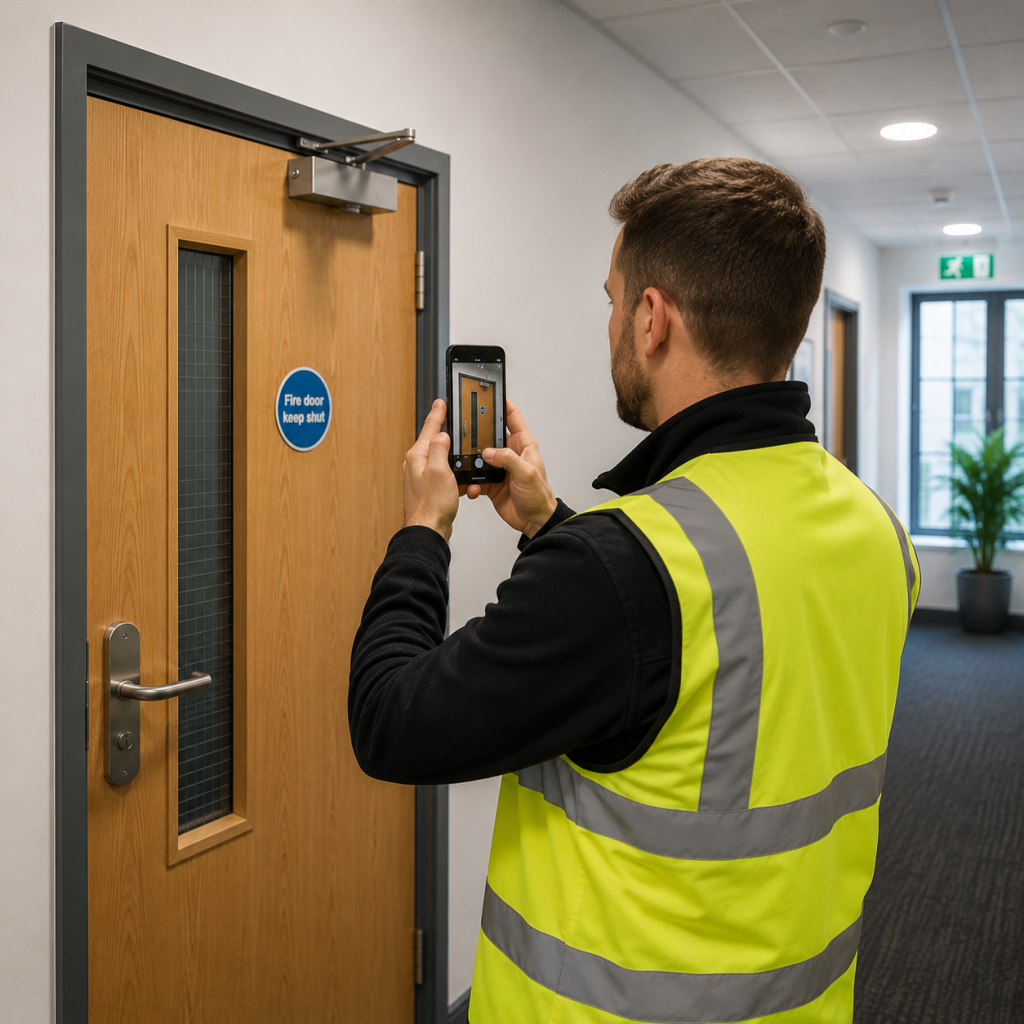
Use this quick, photo-style routine for each door. Take one context photo from 2 to 3 metres showing the doorway, plus close-ups of each item with a ruler or gauge where you measure.
- Label and location: Photo of the door ID, area, and intended rating. Capture any certification label.
- Gaps: Close-ups at head, lock side, hinge side, and threshold with a feeler gauge or ruler.
- Seals: Shots along the full perimeter showing seal type, continuity, and condition.
- Hinges and hardware: Photos of all hinges, latch and keep, closer body and arms, any intumescent pads, and signage.
- Glazing: Close-ups of beads, glazing tape, and any markings. Include any defects.
- Operation: Short video or sequence of images showing the door closing from fully open to positive latch without manual assistance.
Keep filenames tied to a location plan or QR label to make remediation faster and to provide traceability for auditors.
Who can maintain or repair a fire door
Minor adjustments, such as closer settings or replacing like-for-like seals, can sometimes be carried out by competent maintenance staff who understand tested systems, manufacturer instructions, and the door’s certification limits. However, any works that affect the fire-resisting performance, such as replacing glazing systems, changing hinges, altering leaf or frame components, or routing for seals, should be performed by trained and competent personnel. Many estates choose third-party certified installers or repairers for assurance. Where specification is unclear, commission a survey and product-matched repair guidance. Safeguard Consultancy’s fire door inspections service provides precisely that, together with passive fire protection advisory to support compliant completion.
Risk-based triage, what to fix first
Prioritise by life safety impact and likelihood of failure:
- Priority 1, immediate: Doors that do not self-close and latch, severe damage, missing or grossly damaged seals where smoke control is required, incompatible glazing, or ironmongery that prevents closing. Remedy or place temporary controls.
- Priority 2, urgent: Excessive gaps, misaligned keeps, worn hinges causing drag, closer power too weak for reliable closure, missing intumescent pads behind key hardware.
- Priority 3, planned: Cosmetic issues, minor seal wear not yet compromising performance, signage updates, documentation tidying.
Document the residual risk, interim measures, and target dates. Where defects implicate compartment lines beyond the door, consider a focused fire compartmentation survey so you do not repair one symptom while missing a systemic issue.
For estates preparing for audits, a broader snapshot via fire safety surveys can help confirm priorities and budget sequencing.
Documentation that satisfies enforcing authorities
Auditors expect a coherent evidence trail:
- Inspection records: Date-stamped, location-referenced logs with photos, measurements, and priority ratings. Name the competent inspector.
- Certification and compatibility: Door and component data sheets, manufacturer instructions, and evidence that replacements match the tested doorset or approved scope.
- Remediation evidence: Before-and-after photos, installer sign-offs, product batch data, and third-party certificates where used.
- Management records: Your inspection frequency rationale in the fire risk assessment, links to evacuation plans where door performance is critical, and controlled versioning to support the Golden Thread under the Building Safety Act.
If you need to tune your broader compliance story, Safeguard Consultancy’s legislation guidance on fire safety compliance and fire safety audit preparation materials can help you align what you collect with what regulators expect.
FAQ, quick answers to common questions
- Is it a legal requirement to have fire doors inspected? The Fire Safety Order requires responsible persons to maintain fire precautions in efficient working order, which includes fire doors. Regular inspection is the practical route to demonstrate this duty.
- How frequently should fire doors be checked? Use a risk-based schedule. As a rule of thumb, monthly local checks in busy or higher risk buildings, with formal inspections at least every 6 months. Increase frequency for vulnerable occupancies and high-traffic routes.
- What is involved in a fire door inspection? Identification of the doorset and rating, measurement of gaps, checks on seals, glazing, closer operation, ironmongery compatibility, and overall condition, recorded with photos and clear priorities.
- Who can maintain or repair a fire door? Competent persons with relevant training and an understanding of tested systems. Use certified specialists for works that affect performance or certification.
- What is the British Standard for fire door inspection and what evidence should I keep? BS 8214 and BS 9999 provide guidance on fire-resisting door assemblies and management. Keep dated inspection logs, photographs with measurements, product data and certification, repair sign-offs, and version-controlled records that link to your fire risk assessment.
Next Steps
Use the maintenance window to complete a rolling inspection round, fix Priority 1 items immediately, and schedule Priority 2 works with clear specifications. Tie your photographic records to your risk assessment, and review frequency for the summer term and beyond. Where you need assurance or specification support, Safeguard Consultancy can deliver independent fire door inspections and passive fire protection advisory and, where helpful, integrate findings with your broader fire strategy and evacuation planning.
Helpful resources and services from Safeguard Consultancy:
Explore professional fire door inspections and surveys to evidence compliance and plan works:
Fire Door Surveys - Safeguard Consultancy
If defects suggest wider compartment issues, consider a targeted fire compartmentation survey:
Fire Compartmentation Surveying - Safeguard Consultancy
For a broader condition snapshot ahead of an audit, review our fire safety surveys:
Fire Safety Condition Surveys - Safeguard Consultancy
Safeguard Consultancy operates nationwide and brings over 30 years of experience across fire doors, compartmentation, and fire safety management. If you want a calm, defensible path to compliance, contact 0333 366 1015 for support tailored to your estate.
Identifying fire risks is only the first step. To maintain compliance and create a safer workplace, staff need regular training and refresher learning.
Safeguard E-Learning provides online fire safety, fire warden and health and safety training courses designed to help employers demonstrate competence and support their wider fire safety responsibilities.
E-Learning - Online Courses - Fire and Health & Safety Courses