
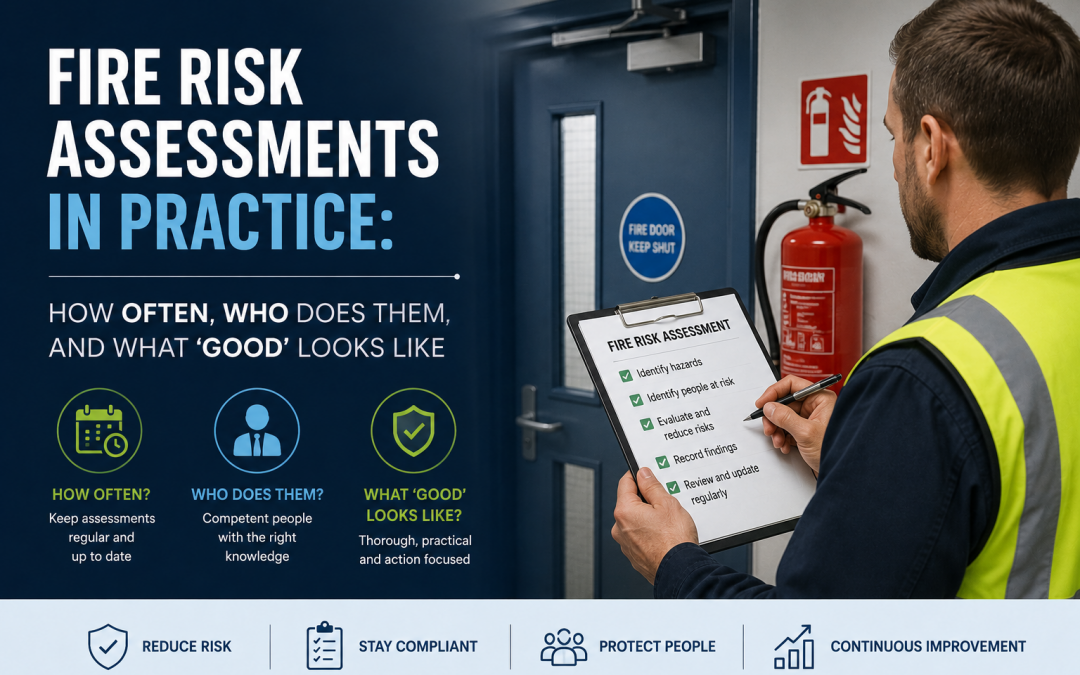
Fire Risk Assessments In Practice: How Often, Who Does Them, And What ‘Good’ Looks Like
You are planning a year of compliance. You need clarity, a workable cadence, and a clear standard for quality. This guide sets out what the law expects, when to review, who is competent to deliver, and what a robust fire risk assessment looks like in practice so you can schedule, budget, and evidence compliance with confidence.
Do I legally have to have a fire risk assessment?
Yes. If you are an employer, landlord, managing agent, responsible person or duty holder for any non‑domestic premises in England and Wales, the Regulatory Reform (Fire Safety) Order 2005 requires you to ensure a suitable and sufficient fire risk assessment is in place and kept up to date. This applies to common parts of residential buildings as well as workplaces and public buildings. Section 156 of the Building Safety Act strengthened duties around cooperation, information sharing, and recording. In short, you must assess, you must act on the findings, and you must be able to evidence what you have done.
Blocks of flats, HMOs, offices, schools, care premises and most other building types fall within scope in some form. Private single dwellings do not, but once you have common parts or employees, the duties apply.
How often should a fire risk assessment be done or reviewed?
There is no single fixed interval in law. The requirement is to keep the assessment current and reflective of the risks. In practice, set a review frequency and trigger events:
- Set your baseline review cycle. Many organisations adopt annual reviews for higher risk or complex buildings and one to two years for lower risk, straightforward premises, provided nothing material changes.
- Trigger an immediate review when things change. Examples include material alterations to the building structure, layout or compartmentation; changes in occupancy numbers or profile such as vulnerable residents or night staffing; changes to the use of space, storage or processes; installation or degradation of fire safety systems; and following any fire incident, near miss or significant maintenance issue.
- Align with sector expectations. Residential common parts, HMOs and sleeping risk buildings merit at least annual review. Offices with stable layouts and strong management may justify longer intervals, but many still choose yearly. Schools often review annually and after refurbishments or timetable changes that alter occupancy patterns.
Record your chosen review frequency, your triggers, and the rationale. Then stick to it.
Who can undertake a fire risk assessment?
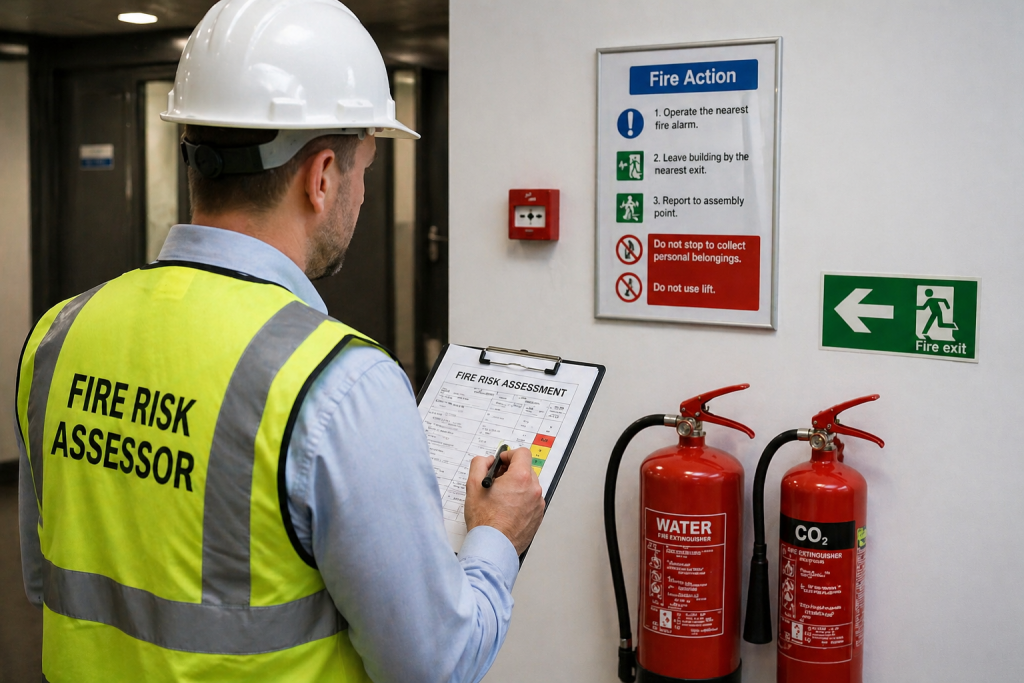
The law requires a competent person, meaning someone with the appropriate combination of training, experience, knowledge of fire safety and the specific building type, plus the ability to identify hazards and evaluate risk. For simple, low‑risk premises, an in‑house competent person might undertake the assessment. For multi‑occupied residential buildings, complex offices, schools, healthcare or any setting with sleeping risk or complex systems, using an experienced third party fire risk assessor is strongly advised to meet the suitable and sufficient test.
Competence includes understanding of Approved Document B, BS 9999 and BS 9991, evacuation principles, fire doors and compartmentation, detection and alarm categories, management arrangements, and how these interact with your building and occupants. Independence helps ensure objectivity and a deliverable you can defend.
Do all blocks of flats need a fire risk assessment?
Yes, the common parts of all blocks of flats require a fire risk assessment under the Fire Safety Order. The scope should reflect the building’s height, age, construction, occupancy profile and systems. For smaller, straightforward blocks, a standard assessment may suffice. For larger or higher‑risk buildings, you may require deeper investigation of fire doors, smoke control, compartmentation and evacuation strategy. Where intrusive checks are necessary, agree this in advance and coordinate access and making good.
If you are a landlord or managing agent, schedule your landlord fire risk assessment and keep your action plan live so you can demonstrate proactive management across your portfolio. Where relevant, ensure you have a clear fire risk assessment for flats covering the common parts and the interfaces that affect resident safety.
HMOs, schools and offices, what cadence works?
- HMOs. Treat as sleeping risk with potentially higher turnover and variable management control. Plan at least annual assessment and interim reviews when tenants change, room use changes, or works take place. Verify fire doors, alarms, emergency lighting and escape routes at each review.
- Schools. Aim for annual assessment, then review after refurbishments, curriculum changes that affect equipment or labs, or events altering occupancy patterns. Reference BB100 for design and management principles and keep evacuation drills and documentation up to date.
- Offices. For single tenancy, stable layouts and strong management systems, a 12 to 24 month review cycle can be acceptable if supported by routine checks and no changes. Multi‑tenanted or complex offices benefit from annual reviews, especially where fit outs, floor reconfigurations, or staffing levels change frequently.
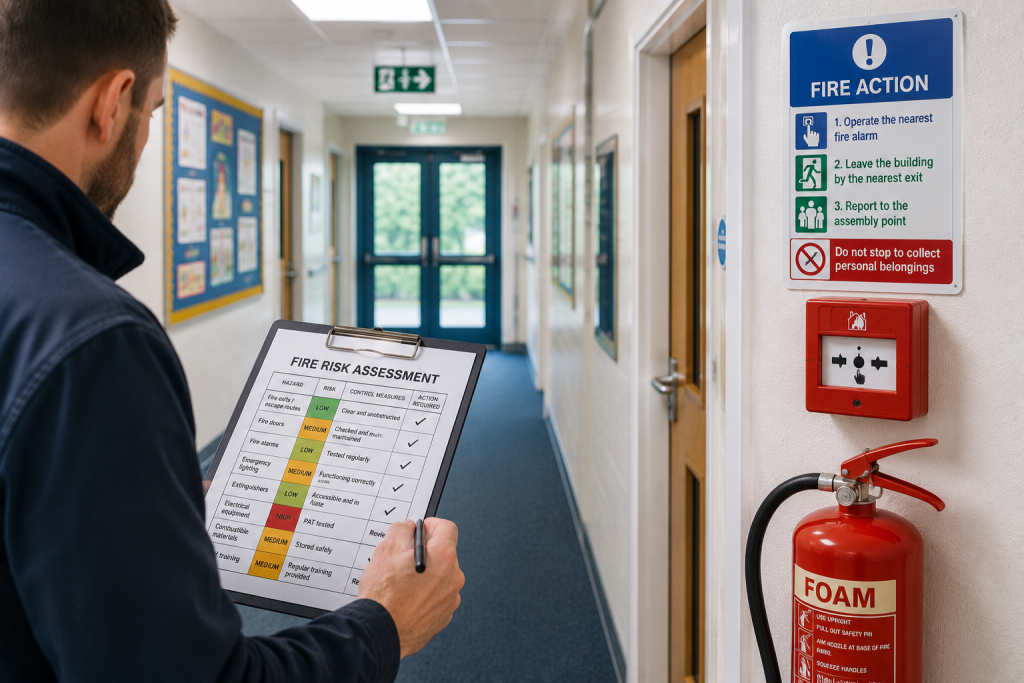
What does a quality FRA deliverable look like?
A good report is practical, evidence based and auditable. Expect:
- Clear scope and methodology. State areas assessed, limitations, standards referenced and any intrusive elements.
- Building and occupancy profile. Describe construction, height, compartmentation strategy, fire doors, detection and alarm, emergency lighting, firefighting equipment, and management arrangements including training and testing regimes.
- Risk evaluation with rationale. Link findings to life risk and legal duties. Avoid vague statements and provide reasoned judgments.
- Prioritised actions with timeframes. Distinguish immediate life safety issues from planned improvements. Include responsible owner and dependencies.
- Evidence trail. Dated photos, plan mark‑ups, sample check records, and references to certificates or maintenance logs.
- Management actions. Practical steps on housekeeping, drills, training, record keeping, and contractor control.
- Integration with your golden thread. Ensure the assessment feeds your building information, so changes and remedial works are traceable.
Insist on a deliverable that you can brief to directors, share with enforcing authorities, and turn into an action plan without translation.
Triggers for review you should not miss
- Alterations to layout, compartmentation or fire stopping.
- Changes in occupancy, vulnerability, or staffing patterns.
- Changes to the fire strategy, evacuation strategy or alarm cause‑and‑effect.
- Deterioration, disablement or false alarm trends in fire safety systems.
- Any fire, smoke event, or significant near miss.
- New guidance or regulatory changes affecting your premises.
Budgeting sidebar, what drives cost?
Without quoting prices, plan budget envelopes using the following drivers:
- Size and complexity. More floors, more escape routes and more systems to review increase time on site and reporting effort.
- Building risk profile. Sleeping risk, vulnerable occupants or complex processes require deeper scrutiny and sometimes intrusive validation.
- Information quality. Up to date drawings, previous reports and maintenance records reduce uncertainty and time.
- Access logistics. Multi‑occupied buildings, secure areas, and out of hours work add coordination effort.
- Depth of verification. Sampling of fire doors, emergency lighting tests, or targeted compartmentation checks extend scope.
- Follow up support. Action planning workshops, contractor briefs, or re‑inspection to verify close‑out add value and time.
Plan for assessment, follow up and a proportion for verification so your action plan closes cleanly, not just lands on a shelf.
Who pays for a fire risk assessment?
Responsibility sits with the responsible person or duty holder. In residential blocks this is typically the freeholder, RTM company or managing agent on behalf of the landlord, with costs often recovered through the service charge in line with the lease. In workplaces the employer or building owner pays as part of statutory compliance. Clarity on who commissions and who funds the subsequent remedial works should be agreed at the outset.
Keep compliance moving across the year
Build an annual cadence around your assessment, your testing and maintenance, your training and your reviews. Tie actions to realistic timeframes and track progress. Where you have multiple properties, sequence higher risk first, then cycle through lower risk sites and rechecks.
Safeguard Consultancy supports organisations nationwide with practical assessments, clear reporting and ongoing compliance support. If you need an office fire risk assessment as part of a wider programme, or portfolio planning for residential buildings including HMOs, we can help you set the cadence, define the scope, and deliver the evidence you need.

Take action
- Confirm your legal duty and name the responsible person for each site.
- Set your baseline review frequency and trigger list.
- Commission a competent assessment and demand a prioritised, evidence‑rich report.
- Build your action tracker and assign owners and dates.
- Review after any change, then roll your plan forward for the next 12 months.
For advice or to book your next fire risk assessment, contact Safeguard Consultancy on 0333 366 1015. We provide clear, defensible reports and ongoing support so you can demonstrate fire safety compliance with confidence.
Fire Risk Assessment - Safeguard Consultancy
Note on further reading: For sector guidance and obligations, review fire risk assessment regulations and wider fire safety compliance resources.
Looking Beyond Your Fire Risk Assessment?
Identifying fire risks is only the first step. To maintain compliance and create a safer workplace, staff need regular training and refresher learning.
Safeguard E-Learning provides online fire safety, fire warden and health and safety training courses designed to help employers demonstrate competence and support their wider fire safety responsibilities.
Fire Safety Training & Certification: Online Courses & Training